Showing posts with label king. Show all posts

04 April 2019

Malice in Wonderland

The American commentator Tucker Carlson is known for his warnings about immigration and diversity. In this monologue, he uses several rhetorical tools with venomous effect: extreme interpretations, rhetorical questions that imply extreme or unacceptable answers, unsupported allegations.

The technique is clever; it enables him to charge his opponents with extremism without ever producing evidence. For example, he asks if we have enough doctors to take care of immigrants, and whether we can afford their care. On the face of it, the question is reasonable. However:
  • He charges that the Democratic party and the tech barons don't want you to ask questions like this. How does he know?
  • He apparently wants you to assume that the answers to his questions are always negative or extreme -- without making a place for research, without considering the possibility of better health care arrangements, and without considering the contributions immigrants make to tax revenues, insurance company revenues, etc.
  • He seemingly wants you to see immigrants as competition for a limited pool of resources -- and unworthy competition at that.
Sometimes he doesn't hide behind a rhetorical question. "If you agree with her [representative Alexandria Ocasio-Cortez], you're virtuous; if you don't, you're a monster. There can be no compromise!" "Big business ... likes their immigrants low-skilled and cheap; Ocasio-Cortez does, too."

Over and over, he charges that anyone who asks his kinds of questions will be charged with "racism." I've rarely if ever heard of someone being called a racist simply for asking questions for the sake of genuine research and policy design. (I'm sure it might happen; dishonest rhetoric is not an exclusive monopoly of the right.) However, tendentious questions advocating favorable treatment for some and exclusion of others might well deserve that "racist" label.

It is so tempting to slap this iconic Fox News figure around by treating him the same way he treats his opponents -- with sly, dishonest rhetoric and snarky comebacks. Instead, I have a sincere, if partly rhetorical, question of my own.

Before I get to that question, I want to concede a generous assumption to Carlson and his segment of conservative media. Let's assume that all who call themselves conservative (and particularly the Christians among them!) want the USA to be a blessing to the world. One way or another, we all want God's will on earth as it is in heaven, with everyone treating neighbors as themselves. If someone in our current rhetorical battles wants a future that is nice for them but wretched for others, or disclaims any responsibility for those who suffer, let them say so publicly instead of simply trading on fear, jealousy, and resentment.

Given that assumption, can you discern a vision of a desirable future for the USA and the world in the anti-immigrant, anti-diversity party that makes up so much of Trump's base? With all that malice and venom, is there another side of the coin that would compensate? Persuade us with a conservative vision of a country and world at peace, where the better angels of our nature could come out and play. Let us hear the policy implications, and let us subject those proposals to the same questions of resources  and realism as Carlson asks ... only without the mocking tone and implied eyerolls. Since it's fun to point at failures of socialism, what examples are out there of conservative success stories that have been blessings to the world?

Or does this party simply foresee permanent conflict? Walls alone will not solve the problem: full isolation from the world would impoverish us as well as the world in countless ways. Furthermore, it's too late! We already have diversity -- both its richness and its discontents -- within the country, along with a huge number of people advocating for that diversity and rejoicing in it, even as they wrestle honestly with its complications. The monolithic "radical left" of Carlson's rhetoric is a myth, and the real left (including its Christian components) is constantly grappling with nuances.

Example: the controversy over Joe Biden's tactile bonhomie, currently a source of amusement to Carlson and friends. It's a serious issue (and reminds me of John Turner's troubles 35 years ago), but I see people making reasonable arguments on all sides (some finding it hard to see how Trump supporters could exploit this issue). Same with border enforcement, reparations for slavery, health care financing, and all the other instances where there are no actual jack-booted socialists in evidence.

So, once again: How would a militarized border, tax concessions for billionaires, ruthless trimming of low-income protections, and the other features of today's political right, build the beloved community? We know a lot about what that group is against, but what vision of the future are they actually for? Whom does it bless, whom does it cast out?


Rowland Scherman; source.  
Today is the anniversary of the assassination of Martin Luther King, Jr. I've written about my own memories of this event in previous posts. Today, in the service of actual vision, I want to pass on a blessing from Martin King, a blessing dated August 28, 1963. His paired contrasts ("Jews and Gentiles, Protestants and Catholics") might today form a longer list, but the breadth of his vision is still breathtaking -- and we are still falling short. In today's atmosphere of malice and division, it's an urgent antidote:
I have a dream that one day every valley shall be exalted, and every hill and mountain shall be made low. The rough places will be plain and the crooked places will be made straight, “and the glory of the Lord shall be revealed, and all flesh shall see it together.”

This is our hope. This is the faith that I go back to the South with. With this faith we will be able to hew out of the mountain of despair a stone of hope. With this faith we will be able to transform the jangling discords of our nation into a beautiful symphony of brotherhood. With this faith we will be able to work together, to pray together, to struggle together, to go to jail together, to stand up for freedom together, knowing that we will be free one day. And this will be the day. This will be the day when all of God’s children will be able to sing with new meaning, “My country ’tis of thee, sweet land of liberty, of thee I sing. Land where my father died, land of the pilgrim’s pride, from every mountainside, let freedom ring.” And if America is to be a great nation, this must become true.

So let freedom ring from the prodigious hilltops of New Hampshire; let freedom ring from the mighty mountains of New York; let freedom ring from the heightening Alleghenies of Pennsylvania; let freedom ring from the snow-capped Rockies of Colorado; let freedom ring from the curvaceous slopes of California. But not only that. Let freedom ring from Stone Mountain of Georgia; let freedom ring from Lookout Mountain of Tennessee; let freedom ring from every hill and mole hill of Mississippi. “From every mountainside, let freedom ring.”

And when this happens, and when we allow freedom to ring, when we let it ring from every village and every hamlet, from every state and every city, we will be able to speed up that day when all of God’s children, black men and white men, Jews and Gentiles, Protestants and Catholics, will be able to join hands and sing in the words of the old Negro spiritual: “Free at last. Free at last. Thank God Almighty, we are free at last.”
Source.  
Within this vision, there is methodology: "...With this faith we will be able to work together, to pray together, to struggle together, to go to jail together, to stand up for freedom together...." As E. Stanley Jones said, there is room in this vision for conservatives and radicals keeping each other honest -- "The conservative conserves the values of the past, and the radical wants to apply them to wider and wider areas of life." But I don't see any room for lies and malice.


Becky Ankeny on approval vs obedience.
...[I]t comes as an unpleasant shock to hear Jesus say as reported in Luke in the anti-beatitudes: “Woe to you when all speak well of you, for that’s how their ancestors spoke of false prophets” (Luke 6:36).
What would 40 acres and a mule mean today? (Thanks to Steven Flowers for the link.)

Rising mortality rates challenge one of Vladimir Putin's top priorities.

Madeleine Ward on the crucial importance of social cohesion in post-Brexit Britain. (Thanks to Fulcrum for the link.)


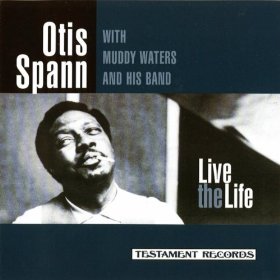
Once again, Otis Spann's tribute.

04 April 2018

Returning to April 4, 1968


I remember this broadcast, especially the statement by Lyndon Johnson.


One of my most vivid memories of April 4, 1968, still with me after fifty years, was listening to U.S. president Lyndon Johnson's statement that evening concerning the assassination of Martin Luther King. I especially remember flinching with irritation when Johnson said, "I ask every citizen to reject the blind violence that has struck Dr. King., who lived by nonviolence." Even at age fifteen I disliked the utilitarian salute to nonviolence, a salute that seemed to be intended to keep things peaceful on city streets rather than paying actual tribute to the values of nonviolent resistance.

All of this took place on my younger sister's fourth birthday.

I recounted more memories from that difficult evening and the days that followed back in this earlier blog post, entitled "April 4, 1968." (Text below; original here, with Jeremy Mott's comments.)


To describe the emotions in our home on April 4, 1968, the day Martin Luther King was assassinated, I have to go back to October 1962. I was nine years old, and was having a hard time decoding all the reasons my parents seemed so fearful. That was the month James Meredith integrated the University of Mississippi, and the news (as I realize now, reviewing my fragmentary memories) was full of the violent resistance to his enrollment. For the first time, I heard my parents using a mysterious term, "knee-grow," an apparently anatomical term that made no sense as a source of fear, but it was clear that "knee-grows" were apparently causing big problems for the USA.

source
The anxieties of fall 1962 were only just beginning. Later that month, the Cuban missile crisis seared itself into my consciousness as the first major political crisis I can still clearly remember. I can picture the front pages of newspapers, showing the mobilized U.S. Navy imposing its "quarantine" around Cuba. The lesson of October for me: the world outside my home had the ability to make my parents very fearful.

It wasn't long before I understood what "Negro" really meant, but the twin dangers of black people and Communists in my parents' worldview were frequently confirmed. In the fall of 1963, President Kennedy was assassinated. After we were supposed to be asleep, I heard my mother ask my father for reassurance that Lyndon Johnson was up to the task of confronting the Soviets. And their anxieties also had a local focus: Beginning with a voluntary program in 1963, Evanston's schools were becoming integrated.

In those years, we lived right on the boundary line between black Evanston and white Evanston, but my elementary school, Miller School (now a Montessori school), was halfway to Lake Michigan and almost completely white. During my elementary years, our school superintendents Oscar Chute and, later, Gregory Coffin, were both very committed to integration, and my parents (as we children realized from those late-night overheard conversations) were emphatically not. Well, at least my mother was not. She was the one who grew up surrounded by Nazi ideology.

By 1968, I was in my first year of high school. I started my diary on the first day of that year; little did I know on January 1 what a tumultuous year it would be. Most of my early entries were lists of television programs watched and (when baseball season started) White Sox scores. Hoyt Wilhelm, with his strange name and equally strange knuckleball pitch, was my hero that season. But normalcy came to an abrupt end on April 4, my younger sister's fourth birthday, when the electrifying and awful news came that Martin King had been killed.

source
My family went into crisis mode. My mother was sure that we white kids would be attacked if we showed up at school, so we were kept home for several days as I smoldered at our captivity. I used the time to listen to my home-made crystal radio (which received two stations, including WJJD, the "Country Gentlemen") and tried to make sense of what I was hearing. Finally back at school, our high school teachers encouraged us to understand the poison of racism--and I took them at their word, thus in a way proving correct my mother's worries about the Communists in the school administration.

The one thing I couldn't confess at school was the shock I felt at my mother's words, the very evening of King's death. I still remember the blonde end table next to the sofa where I was sitting; she sat on the other side. Between us was a table lamp with its brass base and spokes leading up to the socket and bulb. My mother said it served King right that he was murdered, because he had no right to bear the name of the great German reformer Martin Luther.

I suppose that I was still an atheist at that point, as were both my parents. But as I look back, I think my conversion may have begun with my attempts to confront and unravel that strange pronouncement. Soon after, I began to listen every Sunday night (surreptitiously, after bedtime) to the First Church of Deliverance radio broadcasts, hearing Rev. Clarence H. Cobbs pray for "the sick the shut-ins, and all those who love the Lord," always feeling strangely touched at that last phrase.

This meditation on April 4 ends with Martin Luther King's words to those who could not understand why he added a concern for peace and reconciliation to his racial justice portfolio. "Have they forgotten that my ministry is in obedience to the one who loved his enemies so fully that he died for them?" To Martin King, Clarence H. Cobbs, Oscar Chute, and Gregory Coffin: thank you for your part in making these words so real for me. From humane schoolteachers and from radio voices, even from violence and words of hate so close at hand, came a new home, a new worldview, and a new purpose that keeps me going to this day.


Excerpt from Agronsky's interview on NBC.
During my years of teaching in Russia, Dr. King provided powerful lessons that were part of my vision for what I could do in the classroom:
  • His English usage and rhetoric showed how language could be mobilized to serve moral values.
  • The way he embedded the Bible into his speeches and conversations helped demonstrate the influence of the English-language Bible in public life. One of my class handouts was a biblically-annotated version of the "I have a dream" speech; another was a listing of significant phrases from this transcript of Martin Agronsky's interview of Dr. King not long after the Montgomery bus boycott.
  • He was a young man, not much older than my students, when he began changing the course of history.
  • Everything about him was a powerful refutation of racist stereotypes that are as pervasive in Russia as they are in the USA, and less frequently challenged.
  • Above all, he demonstrated how faith and civic engagement could serve each other. (My principle in the classroom was never to make tendentious comparisons between the USA and Russia, but provide tools for students to consider for themselves whether to use, or not.)
During my Ferguson Fellowship year at Woodbrooke Quaker Study Centre, I drew upon Dr. King's sermons against the war in Viet Nam as part of my materials showing how evangelism and the Friends testimonies were interrelated. Excerpts are here.

And here's a link to David Finke's tribute to "the Doc," referencing nonviolence in its full perspective, a perspective that the U.S. president was not free to acknowledge on that bleak evening.


Four historians consider the response of white evangelicals to the U.S. civil rights movement.

Adria Gulizia: Is Jesus a nazi sympathizer?

The first official annual sessions of Sierra-Cascades Yearly Meeting of Friends.

Mike Farley's strange Easter and the sowing of seeds.

The BBC's religion editor, Martin Bashir: there is no mastery of mystery.

Telegram's presence on the Russian Internet may be diminished, but this BBC article (Russian) suggests ways to keep using it.

More on #metoo in Russia; the story of Darya Komarova.

On the shooting of Palestinians: indifference may be worse than pulling the trigger.


No video this week. I'm repeating the track from the original 2012 post, one of Otis Spann's tributes to Martin Luther King.

22 August 2013

Quaker culture

Centre Friends meetinghouse interior, Delaware; source.
Sometimes I read novels like Jodi Picoult's The Storyteller and experience a sort of density envy.

Judaism and Roman Catholicism, both central to the novel, have the intellectual resources--doctrines, scriptures, etc.--of any self-respecting religion, but they also have so much more--awesome globe-spanning cultures with many centuries of social patterns, art, rhetorical traditions, everything from amazing galleries of saints and mystics to rich stores of self-deprecating humor. Of course the same is true of many other confessions, not least the Russian Orthodoxy of our present home.

What equivalent resources do we Quakers use to decorate our world? Not all that much! Maybe it's not surprising that many Friends cling fiercely to our relatively few and relatively recent folkways, making them sometimes more important than what we believe about our relationships with God and with our beautiful but too-violent world. One Evangelical Friends leader gave us a useful challenge a few years ago: Are we trying to win people to Christ, or are we trying to promote what he called "ethnic Quakerism"?

Evangelical Quakers may not appreciate all the features of this so-called "ethnic Quakerism." But we don't settle for a bloodless generic Christianity, either. In the USA, for example, many of us draw heavily from the Holiness heritage.

So I've been thinking about the features of our thin, young Quaker culture that I cherish, and trying to identify the most raw, precious, disciple-forming expressions of these features and, in contrast, the "ethnic" distortions that they can lead to:

Simplicity ... I'd like to cultivate that directness that characterized early Friends, and their ability to avoid ostentation and discern the meaning of "enough" ... but not the "plainer than thee" legalism or the compulsory understatement of English-speaking ethnic Quakerism.

Peace, but not conflict avoidance (or conflict that is masked and conducted behind the scenes) nor what R.W. Tucker called "the cult of middle class pacifism." I want to learn how to confront violence and its practitioners, without myself getting poisoned by the soul-violence of typical political rhetoric all around me.

Equality, but not the denial of spiritual gifts that sometimes masquerades as equality. Leadership is a valid gift; we Friends ought to honor genuine leadership (conducted transparently and not simply based on verbal adroitness) while always remembering that leadership is based on God's call, not social status. And let's please resist the elitism that continues to plague many corners of the Friends world.

Church governance by community discernment, driven by prayer. The Friends meeting for business is where we ask ourselves, "What does God want to say and do through us? How will we collect and deploy our resources to reveal God's love to our families, community, world?" Or do we forget to ask, letting routines and agendas and reports and egos occupy our attention, all the while preserving the appearance of quakerliness?

All of the values bound up in Friends discipleship can find expression in the ways we treat each other, behave as consumers, relate to civil authority, praise God unaffectedly in worship, love our neighbors, raise our children, and choose our recreation. Maybe learning those ways, and helping work them out in the specific times and places I find myself, could be enough culture for me.

A few days ago a friend (a Russian Quaker, actually) and I were talking about whether Phil Gulley's fictional world of Harmony, Indiana, might be a more effective way to communicate the actual daily substance of a Quaker lifestyle than the dreary "this is Quakerly and this isn't" preachiness of what sometimes passes for Friends' outreach. I don't know. Most of the world isn't like small-town Indiana, except in one crucial commonality: humanity, usually trying to live their lives according to the values they cherish.


Bradley Manning's sentencing summarized in a brief article with many useful quotations and links. I hope and pray that the gratitude the country owes him for exposing moral rot inside the imperial machinery will sooner or later result in some kind of mercy. (My attempt at a biblical reflection on the Wikileaks scandal is here, for what it's worth.)

A Friendly "Call to Mystics."

Antoinette Tuff's story: "... I gave it all to God, I'm not the hero."

"Jean Bethke Elshtain: In Memoriam" ...

... and Russians say goodbye to an assassinated priest.

A report from Christian Peacemaker Teams: "Kurdish villagers resist U.S. oil company's confiscation of their land."

It's been 50 years since the March on Washington and Martin Luther King's galvanizing sermon. Diane Randall of the Friends Committee on National Legislation writes, "Let Freedom Ring." Aside from its other qualities, the speech is a unique resource for my classes here in Russia. You can get some idea from this handout (PDF).

Otis Spann pays tribute to Martin Luther King: "Hotel Lorraine."


For 40 years I've loved the audio recording of this marvelous concert; only recently I found out that it had also been videotaped. King Curtis and Champion Jack Dupree...  

05 April 2012

April 4, 1968

To describe the emotions in our home on April 4, 1968, the day Martin Luther King was assassinated, I have to go back to October 1962. I was nine years old, and was having a hard time decoding all the reasons my parents seemed so fearful. That was the month James Meredith integrated the University of Mississippi, and the news (as I realize now, reviewing my fragmentary memories) was full of the violent resistance to his enrollment. For the first time, I heard my parents using a mysterious term, "knee-grow," an apparently anatomical term that made no sense as a source of fear, but it was clear that "knee-grows" were apparently causing big problems for the USA.

source
The anxieties of fall 1962 were only just beginning. Later that month, the Cuban missile crisis seared itself into my consciousness as the first major political crisis I can still clearly remember. I can picture the front pages of newspapers, showing the mobilized U.S. Navy imposing its "quarantine" around Cuba. The lesson of October for me: the world outside my home had the ability to make my parents very fearful.

It wasn't long before I understood what "Negro" really meant, but the twin dangers of black people and Communists in my parents' worldview were frequently confirmed. In the fall of 1963, President Kennedy was assassinated. After we were supposed to be asleep, I heard my mother ask my father for reassurance that Lyndon Johnson was up to the task of confronting the Soviets. And their anxieties also had a local focus: Beginning with a voluntary program in 1963, Evanston's schools were becoming integrated.

In those years, we lived right on the boundary line between black Evanston and white Evanston, but my elementary school, Miller School (now a Montessori school), was halfway to Lake Michigan and almost completely white. During my elementary years, our school superintendents Oscar Chute and, later, Gregory Coffin, were both very committed to integration, and my parents (as we children realized from those late-night overheard conversations) were emphatically not. Well, at least my mother was not. She was the one who grew up surrounded by Nazi ideology.

By 1968, I was in my first year of high school. I started my diary on the first day of that year; little did I know on January 1 what a tumultuous year it would be. Most of my early entries were lists of television programs watched and (when baseball season started) White Sox scores. Hoyt Wilhelm, with his strange name and equally strange knuckleball pitch, was my hero that season. But normalcy came to an abrupt end on April 4, my younger sister's fourth birthday, when the electrifying and awful news came that Martin King had been killed.

source
My family went into crisis mode. My mother was sure that we white kids would be attacked if we showed up at school, so we were kept home for several days as I smoldered at our captivity. I used the time to listen to my home-made crystal radio (which received two stations, including WJJD, the "Country Gentlemen") and tried to make sense of what I was hearing. Finally back at school, our high school teachers encouraged us to understand the poison of racism--and I took them at their word, thus in a way proving correct my mother's worries about the Communists in the school administration.

The one thing I couldn't confess at school was the shock I felt at my mother's words, the very evening of King's death. I still remember the blonde end table next to the sofa where I was sitting; she sat on the other side. Between us was a table lamp with its brass base and spokes leading up to the socket and bulb. My mother said it served King right that he was murdered, because he had no right to bear the name of the great German reformer Martin Luther.

I suppose that I was still an atheist at that point, as were both my parents. But as I look back, I think my conversion may have begun with my attempts to confront and unravel that strange pronouncement. Soon after, I began to listen every Sunday night (surreptitiously, after bedtime) to the First Church of Deliverance radio broadcasts, hearing Rev. Clarence H. Cobbs pray for "the sick the shut-ins, and all those who love the Lord," always feeling strangely touched at that last phrase.

This meditation on April 4 ends with Martin Luther King's words to those who could not understand why he added a concern for peace and reconciliation to his racial justice portfolio. "Have they forgotten that my ministry is in obedience to the one who loved his enemies so fully that he died for them?" To Martin King, Clarence H. Cobbs, Oscar Chute, and Gregory Coffin: thank you for your part in making these words so real for me. From humane schoolteachers and from radio voices, even from violence and words of hate so close at hand, came a new home, a new worldview, and a new purpose that keeps me going to this day.


"Preaching when parched."

"What does the Gospel look like?"

"Ray Bradbury gives twelve pieces of advice to young writers."

A Better Atonement... How not to write a book review (but see surprise ending).

"So, what has your experience of mainline churches been like?"

Online matchmaking: Harvard Business School, "Do Online Dating Platforms Help Those Who Need Them the Most?" . . .

. . . and Melanie Springer Mock, "Finding the One in Cyberspace." "...I’m not [critiquing] online dating sites necessarily, but rather the language they use to promote their product...."

Vladimir Putin's friend "Kudrin's game: The Man in the Middle." And Friday PS: the Moscow Times, "Kudrin's Group to Offer Unsolicited Advice. " (Will eventually go behind paywall.)

"Pennsylvania high court rejects final Mumia appeal."


link to purchase:
Otis Spann, "Tribute to Martin Luther King"
(at amazon.com)

11 February 2008

David Finke writes to Illinois Yearly Meeting Young Friends

In the preamble to this marvelous letter, David addresses those of us who are of his same generation, explaining his "kairos" intuition that led to his writing the letter that follows. Several of us who received it knew instantly that the full letter deserved wide circulation, for which I (and others) obtained his permission. Hopefully you'll see it posted in several places!

--Johan


My fellow-Friends from the 20th Century (!),

Although you might be appalled at the length of what's below, I still wanted you to see what I've just sent to our IYM Adult Young Friends via their list-serve. It builds on various "conversations" I've had with a number of them, in person and/or via this medium.

If I've been writing too much, I can actually blame some of you (grin!) who have been encouraging me, somehow giving me the idea that I have something to say. Time will tell.

All I know is that every once in a while, there's a sense of "kairos," the "fullness of time," "things coming together." Events of this last week in the American political scene constituted that for me... taken in tandem with the historical parallels that some have been suggesting.

So, I thought, "It's time for reflection, for mining historical lessons, for thinking out loud, for sharing what I think I've discovered at this point in my journey." Whether this was the right venue for it or not, I have no assurance -- and yet I keep getting this question of, "What were the '60s like?" So, I thought I should set some of it down in writing while some of us are still around.

Read this only if you want to take the time and have the inclination -- I won't feel bad if you don't. And, if you have commentary, I'll gladly receive it... and it can be completely unvarnished.

Love, -DHF

----------
From: David H. Finke
Date: Fri, 08 Feb 2008 23:10:10 -0600
To: Adult Young Friends - IYM
Cc: Emily Stewart - FGC Youth Program
Subject: Thoughts on Then and Now

Friday, 2-8-08

My dear adult Young Friends in IYM,

You are on my heart so often, and a few of you have given me permission to write you frequently and at some length. In recent days, I've felt moved to share some more reflections with all of you. I do hope I'm not intruding, and of course I welcome any of you getting in touch with me directly if we'd like to pursue these ideas... or discuss them on this listserve.

It occurs to me to quizzically title this, "An Epistle from the 20th Century." The "epistle" part doesn't connote a formal document from a gathered body, but rather has the sense of a personal letter which tries to address some weighty matters that are both contemporary and eternal. I'm not a blogger, but I do love to write letters -- and email makes it so simple. The "20th Century" part simply acknowledges that the bulk of my life will have been spent before this present century and millennium, and yours will be in this one. And, we have the blessing of overlapping and hopefully learning from each other. That, for me, is a rich privilege -- for us to share parts of our lives with each other: us individually, and us corporately in our beloved Religious Society of Friends.

My present reflections are prompted by two dates in this past week (not counting my birthday and our wedding anniversary, both of which were interesting but not earth-shaking.)

One was February 1st. On that date in 1960, my freshman year in college, 4 courageous college students (whose names are remembered by almost no one) took a step which changed American society and contributed to some of what our country can give to the world -- a positive possibility which is seldom seen these days. They went to a Woolworth's lunch counter in Greensboro, NC, sat down and ordered coffee -- after having shopped in other departments of that "dime store" where their money was gladly taken.

The staff was thrown into utter consternation. Blacks, if they wanted a snack, were expected to order it downstairs for take-out, and use a side door. One of the four, whom I heard interviewed on NPR last Friday, said he had never felt so free and whole in his entire life -- before or since -- as when he and his buddies took a seat on those stools... even before they tried to be served. In that moment, he acted not in terms of definitions and expectations of his race, but rather simply as a human being -- someone who wanted a snack and expected his money was as good as the next person's. How obvious!

The "Greensboro Four" were not served that day... nor were they arrested, by a cop who repeatedly walked behind them, mumbling and slapping his nightstick in his palm. Everyone left at the end of the day. Next day, the 4 were back: Same scene. Day after that, 16 college students took seats at that counter. Then 300 came. Then 1000. And that was just in Greensboro. A spark had been lit, and within days those liberating, nonviolent flames swept across the South in what we soon called "The Sit-in Movement." There's so much I could say about that (maybe later). In the meantime I hope you can incorporate study of their vision and methods and personnel and dynamics into your own ongoing education.

My personal connection (I do love to spin out tales from my own "movement history"!) was that we in Oberlin had daily reports from the South -- telephone conversations transcribed and rapidly disseminated throughout campus. (Think what the Internet and cellphones and video could have done. And that's not even counting YouTube, Facebook, IM, texting...) For years there had been an exchange program between our campus and Fisk University in Nashville. So our students there gave us a first-hand feel of what was developing in that town, which in upcoming weeks shared its leadership and inspiration with hundreds of campuses, South and North. Some of this has been preserved in documentary films of that era (every library has them); more can be gotten from books like David Halberstam's "The Children" -- describing students who took on the city's power structure and racist traditions and in a matter of weeks changed them.

It was not accidental that for the whole prior year African-American students in Nashville had been taking training workshops in the theory and practice of Gandhian nonviolent resistance led by a young Methodist minister, Jim Lawson, sponsored by the Fellowship of Reconciliation. When the spark came from Greensboro, the Nashville students were prepared. They were ready to act on their own behalf, but they also shared their skills with others. They became the winds and flames of change that swept the South and gave a sense of purpose and possibility to those of us in the North whose lives up until then had been spent in "The Eisenhower Years" -- times of conformity and smug self-satisfaction as a society.

But those were also times of accelerated militarization in a Cold War that for a decade had us all teetering on the brink of apocalyptic global destruction. We lived in fear of the hair-trigger of "Instant and massive retaliation," the official doctrine of "MAD" -- "Mutual Assured Destruction," fueled by fears of "The Red Menace." The '50s had also been the time of that domestic terror collectively known as "the McCarthy Era." To challenge anything which was unjust though traditional was to risk suspicion or ostracism (if not prosecution) as a "Red," a "communist sympathizer," or a "pinko." Overnight, from one campus town in the South, the shell started to crack.

One of the privileges of my life was to have been in a college environment precisely when the example of nonviolent social change through disciplined and joyous direct action -- starting with those mobilized black Southern students and their Northern allies -- showed possibilities and set the stage for a host of other movements which, in retrospect, we lump together as "The '60s." If and as you want, I can trace through some of the pluses and minuses of that time, lessons experienced and learned. For me, the opportunities both for doing voter registration work (before federal Civil Rights legislation had been accomplished) and working against the nuclear arms race (especially above-ground nuclear testing) were distinctly inspired by what started February 1st, 1960. Students did it; we too could do it.

The other significant date of this past week was "Super Tuesday," the time of the largest collection of Presidential primaries this nation has yet seen. Among the barrage of post-election analysis I've heard frequent allusions to the feel and spirit of the time of John F. Kennedy -- his election, his administration, and the sense of promise popularly associated with that. There is certainly truth in that comparison, though I urge a deeper analysis.

To confess: I voted for Barack Obama, with the single deciding factor being his early opposition to the war in Iraq. It's true that other votes in my family (for Sen. Clinton) canceled out my vote: We in Missouri -- as a State and as a family -- split exactly 50/50. Also, as in our Society of Friends, we respect the personal choices which may take Friends to different conclusions. I add in passing -- but earnestly -- that we should never confuse Quakerism (or our version of it) with a particular faction of the Democratic Party.

So this last Tuesday evening after the polls closed I was at a "watch party" (also hopefully tagged as a "victory party") downtown here in Columbia with other Obama folks. Quite similar to what happened at the same location a year ago when we elected Senator Claire McCaskill, the hall was filled with excited, fresh, committed, enthusiastic young people mostly of college and grad-school age. I could feel our age difference melt away.

They had clearly been the "shock troops" of leafletting, phoning, door-to-door canvassing, getting out the vote. Most were white, but one of the major coordinators was black. And all of them were under, I would say, 25... or 30 years old at the most. Their efforts had largely been campus-based, but it helped double the usual turnout numbers for this county. Very few old-time party regulars were there; They have been quite cautious before committing to one or the other of the remaining Democratic Presidential candidates. Always looking to see "which way the wind is blowing" !

If you've never gotten involved in politics at the precinct/ward/ community level, I urge you give it a try sometime, to get a feel of the spiritedness and vision, the camaraderie and just plain fun... and often a lot of free sandwiches or donuts! There's a sense that at the grassroots, democracy has a chance and we can make a difference. And one gets to know some new friends.

But was what I experienced this past Tuesday "like the '60s"? Yes and no.

The "Yes" part was the huge resonance with Barack's message of hope, of possibility, of looking forward rather than backward, of banking on change rather than fear, of trusting and listening to "the little people" rather than the Fat Cats. The shouts and chanting -- in the hall where I was and in the televised venue in Chicago where Obama was speaking -- were highly reminiscent of civil rights rallies that I've been at in the '60s. Some of the cadences of Barak's speech were similar to what I've heard in black churches where I've spent time. There was clearly manifested an Energy -- indeed, youthful energy that sets a pace of work which others of us may have to struggle to keep up with. It got my juices going.

We also heard a lot about the parallel between Barack's relative youthfulness (42, I think) and JFK's -- about 44 when he was elected. The sense of a hopeful future in each case was in contrast to a past (indeed a present) which had been viewed with impatience if not disgust. In both cases there was the conviction that "We can do BETTER that this..." whether the "this" was racial injustice or cultural stagnation or limited vision or alienation from the world... or, in the present, the agony of endless war in Iraq, the erosion of civil liberties, the increasingly despised role of America in the world.

But what about the "No"? That is more complex. Bear with me, please. Obama is, I think, being seen as a potential agent of change, who will bring both a fresh content, a fresh style, and a fresh constituency to politics, who will try to bridge partisan divides. (Remember his speech in 2004 to the Democratic Convention: "There are neither Red states nor Blue states, only the United States.")

JFK, on the other hand, I can assure you was NOT in himself a social change agent. Whereas Obama's previous experience has been as a community organizer (on Chicago's South Side, from which we first elected him to the Illinois State Senate -- I was a constituent!), Kennedy's background was rooted in privilege and comfort. His Dad was a classic Democratic Party wheeler/dealer, part of the "kingmaker" in-group, as ruthless and unprincipled as when (I think I'm right) he made his first fortune in the Prohibition-era bootleg traffic. Joe was out to buy the Presidency for his son, the way that Bush Sr. did for Bush Jr.

Although this seldom comes across in easy journalistic phrases characterizing -- or caricaturing -- the '60s, those of us doing actual social change and justice work (nonviolent direct action for Civil Rights, or opposing the nuclear arms race) saw Kennedy and the Democratic Party establishment as "part of the problem rather than part of the solution." If you study the origins of SDS (about which I could comment first-hand) and read the "Port Huron Statement," you will get a feel for this. It took the "Mississippi Freedom Democratic Party" demonstrations at the '64 Democratic Convention (Atlantic City) to begin to break the stranglehold that the "Dixiecrats" had on the party. That struggle was not easy nor was the outcome a foregone conclusion. Kennedy's choice of Lyndon Johnson as a running mate was part of an old ritual of "balancing the ticket" to keep on board the segregationists who, in 1948, had bolted the party rather than support Truman, who had integrated the armed forces.

The popular image is of JFK, in all his youthfulness with his storybook wife and the "Camelot" myth, giving the nation a vision of getting to the moon, and "asking not what your country can do for you, but what you can do for your country." The truth, though, is that he was a committed Cold Warrior: He allowed the "Bay of Pigs" CIA-led invasion of Cuba, and his later showdown over missiles in Cuba brought us as close as (we believe) we've ever come to World War III. He crusaded against an alleged "missile gap." In no way did he challenge American Imperialism.

In terms of Civil Rights, it is true that Kennedy made a well-timed phone call to the King family when MLK was in jail... and for some of us, it had "opportunism" written all over it. Eisenhower/Nixon had taken a "hands-off" "local-issue" approach to integration. (The exception being that when a federal court order was defied in Little Rock, Ike sent in the Airborne troops... which Bob Wixom can tell you about in the first-person.)

It is true that Kennedy launched the Peace Corp during his term. It is also true that there was already a genuine grass-roots inter-campus movement growing for such an entity: The design for a "Youth Service Corps" was written by the father of my roommate's girlfriend, and that roommate at Oberlin organized a conference which brought together student leaders to learn about and boost such a concept! Kennedy -- seeing the enthusiasm already building -- told his brother-in-law Sargent Shriver to go make it happen. And, it did.

Lest I sound like a tired old radical for whom liberals can never do anything original or trustworthy or good, let me try to clarify and focus on my point: And that is, the dynamic for the significant social changes that started in the early 1960s did NOT begin with government, or those aspiring to political leadership. It began with ordinary folks, doing things that in retrospect looked extraordinary, but which -- with a sense of vision and solidarity and indeed joy and a whole lot of singing -- became possible.

This was the lesson that people should have learned from the Montgomery Bus Boycott half a decade earlier. Martin Luther King didn't start it or bring it to its successful conclusion -- as much as I respect and honor him. It started with a well-trained youth activist (Rosa Parks headed the youth branch of the NAACP in Montgomery, and had been to Highlander Folk School in Tennessee for nonviolence training). She worked with a Sleeping Car Porters' union official (E.D. Nixon) who sensed that Dr. King -- the newest black preacher in town, serving the most conservative parish -- could be a spokesperson-- not only because he was eloquent, but strategically because he was not already identified with the various traditional factions in the black community.

And then, what really made it happen was the thousands of oppressed black citizens who month after month stopped cooperating with the indignities of a segregated transportation system, and who were willing to stand up to a brutal police/court system and overwhelm it with their numbers and staying power. (A Quaker f/Friend of mine, Steve Chase, who teaches environmental activism at Antioch University, has written a paper on this, which I'll be glad to send to anyone.)

Am I putting Kennedy down? I hope not too much. It's a commonplace now that whatever civil rights advocacy he had could not get through Congress; that happened only with the arm-twisting of his Texan Vice-President who succeeded him -- and after several more years of demonstrations, and the martyrdom of many more who were working for voting rights and public accommodation.

Politicians respond; they seldom actually lead. I must admit that, in my viewing of "the Kennedy legacy," I cannot forget that JFK put American troops ("advisors") into Vietnam, quite unchallenging of the role that Eisenhower had picked up after the French left in defeat. It was, in my view, a mixed heritage at best. AND, the fact of his assassination elevated him to near-sainthood in the minds of many... of which I did not count myself.

So does this mean I think we should never trust politicians to carry out our visions, or work for their election if they advocate principals with which we agree? Not at all! I've lost count of how many campaigns for which I rang doorbells (in Chicago and now here in Columbia,) because I wanted to be part of the pressures on the candidate for advancing progressive change rather than upholding the status quo. I will always treasure the experience of having worked for the election of Chicago's first black mayor, Harold Washington -- and remember the thrill (if not disbelief) of his actually winning, and then seeing him get to work shaking things up from top to bottom.

The moneyed nature of politics means that we can usually always count on those with privilege and influence, "the vested interests," "the Establishment," to have the ear of those in public office to whom they contribute. Others of us simply have to get attention by helping politicians get elected and/or re-elected... for which they need us as much as they need those with money. If we've been in their campaigns, we have a better chance of their listening to us when they're in office.

It's a balancing act, contending as it were for the "soul" of a candidate/official. It's a calculated move... and not necessarily the calling of everyone, even of "progressives." Even the best of politicians will have their failings, their blind spots, giving us occasional disappointment. An expectation of perfection in human institutions only sets one up for disillusionment. And yet, a cynical expectation of venality and duplicity can simply take one off the playing field, leaving it to others.

Parenthetically: I got a lesson in politics early in my freshman year from a visiting speaker who had helped organize the United Auto Workers in the 1930s. Kermit Eby was his name, and he was a minister in the Church of the Brethren (as well as the only professor at the University of Chicago not to have a PhD.) I followed him back to his room to talk longer after his speech; very fortunate! He said, "If you 'Let George do it,' George WILL do it... but in George's own way, not yours." In other words, if you want to have an effect, you've got to get personally involved, and not be a perennial spectator.


Part Two.

OK, now what about a Quaker perspective? What I've said so far could simply be standard stuff you'd get in a history or poli-sci class. Maybe interesting, but not the real reason I'm writing you, my dear Fellow Friends.

The first thing to remind us of is that Quakers have had a somewhat different view toward government than our cousins from the other Historic Peace Churches, the Anabaptists, Mennonites, and Brethren. Especially given that The State was murderously out to eradicate them -- the one thing that Catholic, Lutheran, and Calvinist governments agreed upon. These "sectarian" Bible-believing Christians saw government as part of "Babylon," the world under control of Evil rather than what Jesus taught, what God calls us to.

At best, they might concede (along with St. Paul, himself a political prisoner) that government had a role in suppressing crime, but they as Christians would have no part of it: the True Church's calling was to the Kingdom of Heaven -- working for a peace "not as the world giveth." It was inconceivable that they would contend for public office, or have any political stake in that which was "worldly." The impulse was to separate from "the world" and live righteous lives in distinct, committed Christian communities that would be a light of example to the rest of the world. And in large parts of Quaker history, we shared much of that perspective with them -- especially as to withdrawing from support of or participation in war (which is, after all, a major business of national governments!).

However, starting with William Penn (and with some earlier expectations for success of social justice in the Cromwellian Revolution,) Quakers generally were willing to invest themselves in the Body Politic, and hold it accountable to standards of equity and justice. In that first generation they even set up a kind of FCNL lobbying group in a coffee house near Parliament to plead for their concerns.

This (as I've argued in a talk I gave at IYM a few years ago, and could send you) was a motif of engagement rather than withdrawal. This was what Penn called his "Holy Experiment" of Pennsylvania, his "frame of government." And, for a number of decades it seemed to work -- until new non-Quaker immigrants outnumbered the Quakers and wanted tax dollars to go for military defense against Indians. Then, rather than vote war taxes and appropriations, Quakers as a body withdrew from the colonial legislature -- and from then on (in America) had a suspicious view even of working with others politically for various social justice causes. An interesting development... slowly changing as we got toward the 20th century.

I think my own fundamental view about government and Quakers crystallized in the early months that I was working for American Friends Service Committee in the peace-education program of the Chicago office (1967-73.) Those were times when many anti-war folks demonstrated an intense hatred for President Johnson and the war that he kept escalating. With Nixon's election in 1968, that venomous contempt and a willingness to derail the war "by any means necessary" transferred to the new administration. The anti-Vietnam-War movement was, in many of its manifestations, anything but a "peace movement" as Quakers and most pacifists would have understood it. Part of my job, which I understood with great relish, was -- where we could -- to provide a different "tone," examples of creative nonviolence rather than raw rage, models of social change for which people took personal responsibility and around which they experienced Community.

It was in this setting that I -- all of 26 years old! -- was shown a particular passage (printed in the Philadelphia YM's "Faith and Practice") written by young Edward Burrough in 1659. (Just now I see that he, too, was 26 years old.) Burrough entitled his remarks "To the present distracted and broken nation" -- certainly my sense of where America was in the late '60s. (I think that the political and social turmoil at the time of Fox and his colleagues was surely more daunting than whatever we've had in the U.S.) Our executive secretary Kale Williams -- a committed Quaker who was always teaching me things -- quoted what I soon committed to memory:

Burrough wrote:

"We are not for names, nor men, nor titles of Government, nor are we for this party or against the other... But we are for justice and mercy and truth and peace and true freedom, that these may be exalted in our nation, and that goodness, righteousness, meekness, temperance, peace and unity with God, and with one another, that these things may abound."

What an amazing and for me liberating alternative perspective! How different this was from the highly partisan, vitriolic, and often manipulative "peace politics" into the middle of which I was plunged, struggling to find my way through the labyrinths of various coalition efforts.

The question then for me, as a Quaker peace activist, became not so much what was the correct program for forcing our government to get out of Vietnam. Rather, it became what positive, creative contribution could we make -- as either members or agents of the Society of Friendsi -- in terms of the social struggles of our day? Where could we relieve suffering? Where could we witness for Truth?

Our job wasn't to pick the right candidate and make sure he got into office, or compel the adoption of a particular plank in a party's platform. Nor was our job to overthrow a particular economic system. Rightly understood, we had the opportunity to show the "Fruits of the Spirit" -- nicely outlined in Paul's letter to the Galatians (5:22-23)... and certainly on Burroughs' mind as he wrote. We weren't in the business of converting people to Quakerism (though a remarkable number like myself stuck around and joined Friends at worship after first meeting us on vigil lines or in draft counseling.) But we could find and give mutual encouragement to like-minded peacemakers, regardless of label. Those possibilities are never-ending.

The peace movement already had a lesson in the relative failure of placing all our hope in one candidate, when concerned if not terrified "peace people" across the land flocked to the support of LBJ in 1964 against Barry Goldwater, who if elected (so the thinking went) would surely get us into war. And guess what we got with Johnson, after the Tonkin Gulf fabricated episode? For a full decade right after I got out of college the political landscape was irretrievably distorted and sullied by the War in Vietnam, and my generation still suffers from it. My lesson? Never put all your political eggs (energy, expectation) in one basket. No candidate has or shall be The Messiah. There's another one to whom I give that title and allegiance.

I think that even if some of us as Quakers find ourselves understandably drawn to electoral politics, it serves us well to remember several larger thoughts:

(1) "Politics" isn't just about going through electoral rituals every few years. It has to do with ongoing relations between the government and the governed, holding our public servants accountable, and being able & willing to replace them when they fail to serve The Public Good. Being an active "constituent" is every bit as important as being a campaign worker.

(2) We can have significant impact in helping to define the issues, putting matters of peace and social justice onto the public agenda, giving effort to learning for ourselves and then helping others discover what are the "pressing issues of the day."

Politics itself can be -- as it has been for a number of generations of students since my time -- a huge turnoff. But getting involved in issues like global trade equity, workers rights, food supplies and nutrition, health care, combatting poverty, advancing education, upholding human rights of all kinds, opposing militarism, addressing overarching environmental concerns in which life on earth as we know it could be radically altered --- that kind of activism helps shape the landscape to which candidates must either address themselves or find themselves irrelevant and out of a job. "Politics" can simply mean being a responsible part of the "polis," the whole society, of which "politicians" are only one (though a highly-visible) part.

(3) Our inner spiritual life, that which sustains us and gives us vision and strength, must be central rather than tangential to our political expression. I know that you in Illinois Yearly Meeting -- and probably with your young adult Quaker colleagues from across the nation and the theological spectrum -- are on to something when you want to examine "Spirit-led activism." To the extent that you delve into this and share your discoveries and your insights, and show your examples, you will be a vital part of the renewal of our Religious Society. You can remind some in my generation -- who came to Quakers because we knew they were anti-war -- that there are things we are FOR rather than just what we're against.

A person need not necessarily engage in "religious talk" in order to be making a witness to one's religious convictions. You can -- as so many of your are doing -- "Let your lives speak." Your movement as it has coalesced and come to older Friends' attention in recent years has reminded us that our calling is not to persuade each other but to love each other. Something of God's Spirit is moving among you in a powerful way. It reminds me that the phrase occurring most often in George Fox's writing was not about "that of God in every one" but rather that "The Power of the Lord was over all."

Stay centered in that Power. God is blessing you, and the rest of us through you.

With all my love, -DHF

15 November 2007

The romance of war

My seven-year-old friend, who lives up Yalagin Street a short ways, is with his grandmother today. I can tell--he's sending me a steady stream of text messages on her cellphone, asking me when I'll be stopping by again. I'll probably drop in on him and his brother this evening after my last class.

These days, whenever I visit, he's always eager to show me a new fighting technique. He loves to demonstrate how to slither along on the floor, holding his gun high so it doesn't touch the mud of his imaginary battlefield. He drops down from the top level of his bunk bed, cushioning his fall (as he solemnly explains to me) by bending his knees just right so that he lands soundlessly. His gun is slung over his back, his rubber knife is in his sock, his eyes sweep the bedroom for signs of the enemy. Now his back is to the wall and his toy grenade is in his hand as he edges toward the door, ready to peek into the corridor. His face is utterly serious as he sets out to capture singlehandedly the living room where his younger brother is assembling a long bumper-to-bumper line of cars in a question-mark-shaped pattern. ("A traffic jam," he explains.) Younger brother is very accustomed to two roles: either he's the other member of the border patrol unit ("I'm the commander, since I'm more experienced as a fighter," the seven-year-old points out) or as the enemy, having been taken prisoner numerous times, and having survived many gun battles (ftew! ftew! ftew!) .

My friend also loves to tell me about Russia's high-tech weapons. "My dad says that Russia has the best and most modern weapons in the world; nobody will dare attack us," he explained to me. His grandmother, amused, asked him, "You don't think anyone else has such weapons?"

The voice of our country consists of our voices ["voices"
and "votes" are the same word in Russian]
It's a political season, with the Duma elections coming up in a bit more than two weeks. There's plenty of reinforcement for young warriors in the election campaigns--one TV ad for the ruling party shows fighter jets while the voice-over says, "Once again, Russia is a force to be reckoned with." It's pretty mild compared to what Americans are subjected to on television--consider our steady stream of alarmist and jingoist programs of the "Iran: The Ticking Time Bomb" genre, with their flash-by images of military hardware and American soldiers on the move, and their invitation not to discuss simply "being reckoned with" but to prepare for and anticipate and cheer on our next actual armed intervention somewhere.

Putin's plan -- Russia's victory
In fact, the American assumption that our interventions half a world away are always righteous, whereas any attempt by Russia or an Arab country or Iran to influence events in a country right next door to them certainly represents intolerable mischief, helps set the context for Russia's present-day combination of defensiveness and assertiveness.

Back to my young friends. When they get a bit older, they can choose to join youth clubs in which they will practice all these exciting military maneuvers wearing uniforms and using real mud, and get training in hand-to-hand combat and martial arts, and learn to use real guns and knives, courtesy of the local Center for Patriotic Education and similar organizations. Of course such scenes play out all over the world, as yet another generation of God's children on planet Earth get indoctrinated into the myth of redemptive violence (or, even worse, violence as gratification). But I admit it's hard to witness it happening with little children I've known since birth. Their parents are believers and patriots; they're the ones in charge of their children's upbringing, not I. But I've always been close to these boys who call me "uncle," and if I want that closeness to remain genuine, I will have to find some way of saying, at the very least, why guns and I don't get along.

(Mike Slothower, pastor of River of Life Friends in Post Falls, ID, is admittedly in possession of photos of me holding an AK-47 rifle from his collection.)

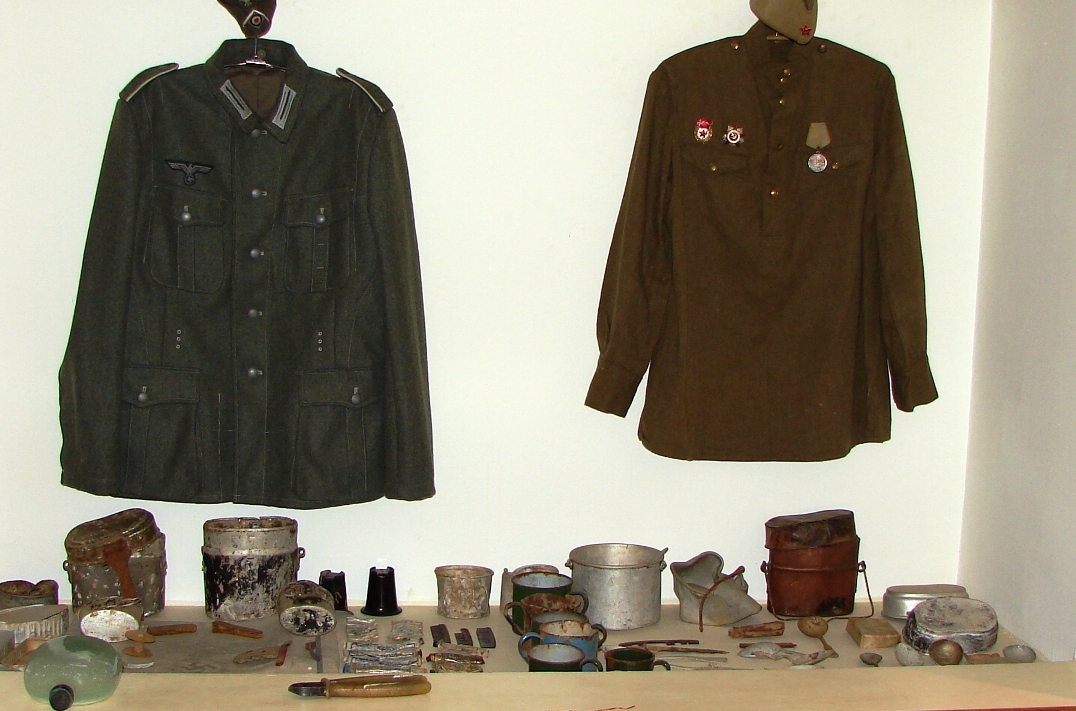
The romanticization of the military is something very different from the sober, thoughtful counting of the costs of past wars. In the last few days, I've seen remarkable examples of the latter task--and they remind me that I'm living in a country that has suffered from war losses on a scale that dwarfs anything we Americans have ever experienced. The Soviet Union lost 27 million soldiers and civilians in World War II, not to mention a huge amount of housing stock and infrastructure. Many dead soldiers have never been found, identified, and properly buried, but a small group of Elektrostal's young people have been participating in "expeditions" to battle sites in the Novgorod area, going to locations identified in archives and by elderly residents as being possible sites for recovery of remains and war paraphernalia. The Elektrostal museum "To the Memory of the Unknown Soldier" has abundant patriotism but not a shred of war glorification. Instead, there's a subdued and very moving sense of respect for the war dead whose recovered battlefield possessions form the basis of the collection. Photos and videos show the grim work of uncovering, sorting, and cleaning bones, identifying them when possible, and then giving them a loving Orthodox burial. German remains and paraphernalia are treated with equal respect. "We don't make distinctions and we're not concerned about blame," said one of the museum workers.

The original impulse for these expeditions and the resulting museum came from Afghanistan war veterans, who have their own museum in a public school near the corner of Mir and Pobeda streets (Peace and Victory streets!). This older museum is also utterly unromantic, focusing on proper honor to those who died rather than an unseemly fascination with the instruments of death.

On the one hand, these museums can be seen as important elements of the restoration of patriotism in Russia. Certainly memories of wars past can be exploited to encourage an unreflective "Motherland" or "Homeland" mentality with all its dangerous consequences. But I doubt that anyone who is all starry-eyed with the romance of war would go through these museums and remain unchanged.


One other fascinating item came out of my visit to the "Unknown Soldier" museum. The Elektrostal expeditions work together with a team from a town closer to the battle areas. That other team has recently expanded its research and recovery efforts to the victims of Stalinist repression. We Western observers frequently comment on the ambivalence of many Russians concerning any deep focus on those terrible years, but I was fascinated that for these young people, unencumbered by layers and layers of either obsessive introspection or defensive denial, this sort of recovery project seemed a simple and logical extension of their respect for the costly past.

Here are some glimpses of this remarkable museum:


The moral language of Martin Luther King: After spending a month on the Revolution, the Declaration of Independence, the Constitution, and various founding fathers, today my American studies class took stock of the uneven and imperfect implementation of those founding ideals by looking at the civil rights movement. I showed two videos: Martin Luther King's "I have a dream" speech from August 1963, and a remarkable NBC news "Look Here" interview (PDF) with King from October 1957, available from iTunes.

It was wonderful to see how spiritual, linguistic, and historical material could be so perfectly integrated simply by studying King's rhetoric. For example, starting with the August 1963 speech:
When the architects of our republic wrote the magnificent words of the Constitution and the Declaration of Independence, they were signing a promissory note to which every American was to fall heir. This note was a promise that all men—yes, black men as well as white men— would be guaranteed the unalienable rights of life, liberty, and the pursuit of happiness.

It is obvious today that America has defaulted on this promissory note insofar as her citizens of color are concerned. Instead of honoring this sacred obligation, America has given the Negro people a bad check, a check that has come back marked “insufficient funds.”

But we refuse to believe that the bank of justice is bankrupt.
I handed out a full copy of the speech, with footnotes locating the biblical quotations.

The "Look Here" interview was incredibly rich with examples of English usage carrying powerful moral freight. Just a few examples:
  • [for the Montgomery bus riders] The cup of endurance had run over
  • I faced this problem at a very early stage in the whole struggle: how could this method [the nonviolent boycott] be reconciled with the Christian faith?
  • We were not seeking to put the bus company out of business but to put justice in business.
  • Noncooperation with evil is as much a moral obligation as is cooperation with good.
  • One who believes in nonviolence must recognize the dimensions of evil in human nature. There is a danger that one can indulge in a superficial optimism, thinking that man is all good.
  • Both [political] parties must come to the point that they see the moral issues involved rather than making a political football out of the civil rights issue.
  • Privileged classes rarely give up privileges without strong resistance.
  • the folkways of white supremacy
  • the rolling tide of world opinion


Righteous links:
Ehren Watada gets a major legal boost in his struggle as a conscientious objector facing a second court-martial.

Quaker House, Fayetteville, has on its Web site one of the best historical summaries of the Quaker peace testimony I've ever heard. (I was a participant at the conference where Jeremy Mott, its author, first presented it, and I'm delighted that it's available online.)

A different view of Benazir vs Musharraf, from the Rootless Cosmopolitan.

"Dirty Harry for President." OK, so Thomas Reese is preaching to the choir, but I love his crisp and clear blanket denunciation of torture from a Catholic (and, for that matter, a Gospel) viewpoint.

While we're dipping into the Washington Post's religion coverage: Does interfaith courtesy trump justice? A synagogue offers hospitality for the ordination of two Roman Catholic women priests.

Northwest Yearly Meeting's own Paul Anderson continues on his quest for the historical John (the Gospel and its writer, that is).


Today's dessert: Charlie Musselwhite in Brazil.

14 April 2005

An Eastwood film with no villain

Piano Blues is about as unpretentious as a documentary could be -- Clint Eastwood built it around a couple of sound-studio pianos, unscripted conversations, and a lot of truly precious archive film.

The film is one of the Public Broadcasting series on The Blues, produced by Martin Scorcese with Volkswagen money to commemorate the Year of the Blues (2003). Eastwood's own long-time affection for jazz and blues piano, obvious in many of his films, made him a natural director and host for this particular documentary.
(See end of post for the film itself.)

Piano Blues opens with a brief segment on the history of the piano and its place in popular music, during which we see Ray Charles arrive for his visit with Eastwood. They sit down at the piano, and Eastwood asks, "What got you interested in music? How'd you start?" -- the most basic questions possible. Throughout the film, that's the sort of question this documentary is built around, along with mutual appreciation of musicians long gone. The conversationalists spend some time playing, too. Ray Charles was not able to cut loose as in the old days, but he gives it a try, and there are nice contributions by other interviewees as well -- notably Dave Brubeck, Dr. John, Marcia Ball, Pinetop Perkins, Jay McShann (who also plays together with Dave Brubeck), and Pete Jolly.

The archival clips are amazing. They include wonderful scenes of Count Basie and André Previn playing together, Joe Turner and Jay McShann, virtuoso cuts by Dorothy Donegan, Professor Longhair, Art Tatum, and Oscar Peterson, and many other priceless musical moments. But for me the absolute best, the high point of the film, was the footage of Otis Spann. (He's the face on the Piano Blues album cover.)

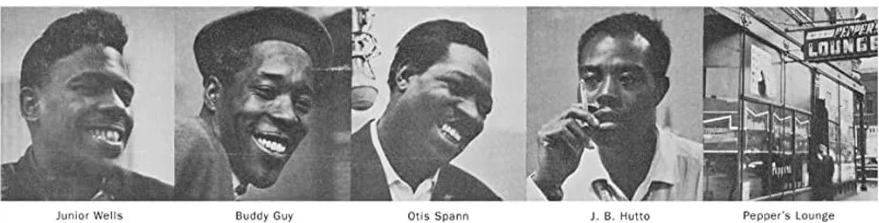
Otis Spann was one of the first blues artists I'd ever heard, during DJ Ron Britain's Sunday night "Subterranean Circus" segment on WCFL radio in Chicago, a time when he played music outside the station's otherwise rigid Top 40 programming. I'll be forever grateful to Britain for including blues on those segments. I vividly remember three songs in particular (but can't remember what order I heard them in): Albert King's "Born Under a Bad Sign" and "Killing Floor," and Otis Spann's "Pretty Girls Everywhere." Later I got hold of the Vanguard album Chicago/The Blues/Today (mentioned elsewhere in these weekly notes, I think) and I became a blues fan for life. The single tiny picture of Otis Spann on the cover of that album was really my only image of the man for decades, until his beautiful face and bluesy fingers came to life in the clips in Clint Eastwood's documentary.

Chicago/The Blues/Today, v. 1. Musicians' photos by Ann Charters on back of album cover. Source.

April 4 comes and goes again.

One of Otis Spann's most movings songs was his tribute to Martin Luther King, who died April 4, 1968. It was released as a single with "Hotel Lorraine" on the other side, and was included in several albums, including Rare Chicago Blues. I got my mp3 copy at musicmatch.com. It starts, "Oh, did you hear the news, happened down in Memphis, Tennessee, yesterday."

Yes, I heard the news, I heard my mother ranting about how Martin Luther King deserved what he got, having usurped the name of the great German national hero (yes, such was the effect on logic of Nazi racist poison), I was kept home from school for fear of riots. "Yeah, fellows, I know you had to have heard the news, that happened in Memphis, Tennessee, yesterday. There came a sniper, wiped Dr. Luther King's life away."

When my sister Ellen was killed by a black drug dealer almost exactly two years later, my musical tastes and my civil rights memorabilia were banned from family life. A year later, I left home, and wasn't living there anymore when my mother put a swastika up on our front lawn during the Skokie parade-permit debate.

"Oh, when his wife and kids came, all they could do was moan... because Dr. Luther King is gone."

Friday PS: Praying for Trade Justice

In a few minutes, British Summer Time, an all-night lobbying event will begin at Westminster Abbey, proceeding from there to encircle Parliament Square, moving from there to Whitehall, the center of the UK's executive branch. 24-7prayer.com's site gives details, including the participation of Tom and Christine Sine of Seattle, well-known among Northwest Yearly Meeting Friends.

This event is part of the Make Poverty History campaign. (U.S. affiliate: www.one.org.)

While you're at the 24-7prayer.com site, look around. I always find something inspiring.

UPDATE: Here's Eastwood's film on YouTube. (It shows up on YouTube in several other places, but this is the highest quality instance I've found. I hope it's not removed; enjoy it while you can. Otis Spann shows up at this point.)